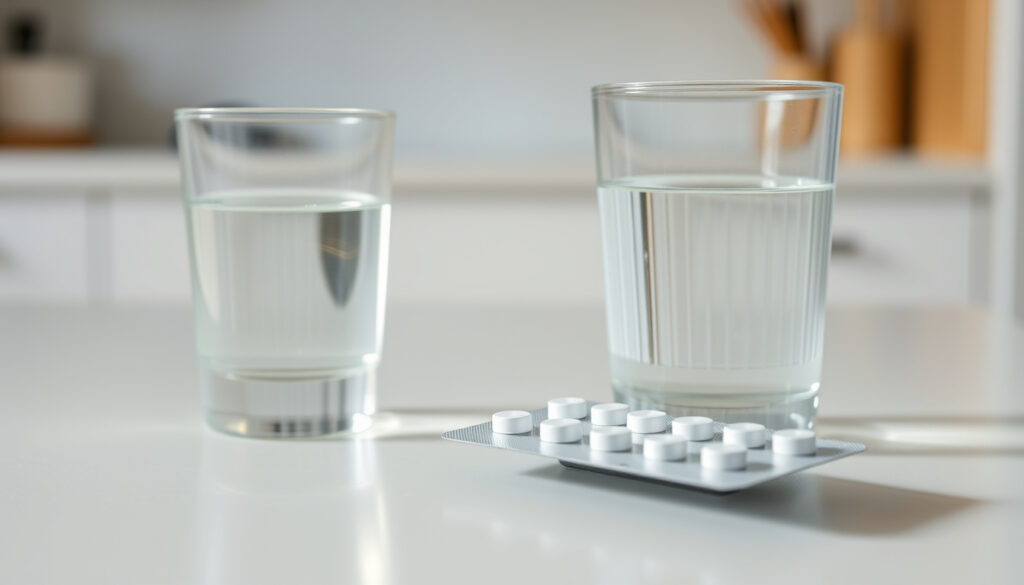
Can You Take Paracetamol on an Empty Stomach? Yes, Safely
Anyone who’s ever reached for a painkiller first thing in the morning without breakfast has probably wondered the same thing: is it safe to take paracetamol on an empty stomach? The short answer is yes — and for reasons that set it apart from other common painkillers.
Absorption time on empty stomach: 30–60 minutes ·
Standard adult dose (500mg tablets): 1–2 tablets every 4–6 hours ·
Maximum daily dose: 4000 mg (8 tablets of 500mg) ·
Common brand examples: Panadol, Tylenol ·
Pregnancy classification: Generally safe but consult doctor ·
Risk of stomach irritation vs NSAIDs: Lower
Quick snapshot
- NHS says it is safe with or without food (NHS Paracetamol for adults)
- No increased risk of stomach ulcers compared to NSAIDs (British Heart Foundation)
- Can be taken at any time of day without meal planning (HSE Paracetamol)
- Exact impact of food on absorption rate for different formulations (The Independent Pharmacy)
- Interaction with alcohol on an empty stomach beyond general warnings (NHS general guidance)
- Long-term effects of frequent empty-stomach use (if any) (No long-term studies available) (The Independent Pharmacy)
- Whether food type (high-fat vs low-fat) affects absorption significantly (The Independent Pharmacy)
- Pain relief onset typically within 30–60 minutes (NHS)
- Absorption may be slightly faster without food (HSE Paracetamol)
- Maximum 4 doses in 24 hours (HSE Paracetamol)
- Pregnancy: preferred analgesic — consult doctor (NHS)
- Alcohol: avoid heavy drinking while taking paracetamol (HSE)
- Liver disease: consult doctor before use (HSE)
Six key facts, one pattern: paracetamol’s safety on an empty stomach is well established across major health authorities.
| Fact | Detail |
|---|---|
| Can be taken on empty stomach? | Yes (NHS, HSE, BHF) |
| Effectiveness unchanged? | Yes |
| Faster absorption without food? | Yes, slightly |
| Vomiting commonly caused? | No, except overdose (HSE Paracetamol) |
| Safe in pregnancy? | Yes, with caution (NHS) |
| Maximum daily dose | 4000 mg (HSE Paracetamol) |
Is it okay to take paracetamol on an empty stomach?
What official sources say about empty-stomach use
- The NHS (UK health service) states clearly: “You can take tablets or capsules with or without food.”
- Ireland’s Health Service Executive (HSE) echoes the same advice, calling paracetamol safe on an empty stomach when used as directed.
- The British Heart Foundation highlights that paracetamol does not irritate the stomach lining, unlike ibuprofen or aspirin.
Why paracetamol is different from ibuprofen and aspirin
Paracetamol is metabolised in the liver, not the stomach lining. That’s why it doesn’t cause the gastric irritation that NSAIDs (like ibuprofen and aspirin) do. For ibuprofen, food acts as a buffer; for paracetamol, no buffer is needed. The trade-off: paracetamol has no anti-inflammatory effect, so for swelling or joint pain, NSAIDs may be more effective — but they require food.
Patients who need both pain relief and anti-inflammatory action face a choice: pair ibuprofen with food or stick with paracetamol on an empty stomach — but not both at once, unless a GP advises it.
The implication: paracetamol’s unique safety profile on an empty stomach makes it the go-to option for people with sensitive stomachs or those who can’t plan meals around medication.
Does paracetamol work if you haven’t eaten?
How food affects absorption and onset of action
- Taking paracetamol on an empty stomach may speed up its absorption, according to The Independent Pharmacy (UK pharmacy resource).
- The presence of food, especially high-fat meals, can delay gastric emptying and thus slow the time it takes for paracetamol to reach the bloodstream.
- In practice, the difference in onset is small — about 15–20 minutes — and not clinically significant for most people.
Evidence from clinical studies on empty-stomach efficacy
Studies consistently show that paracetamol’s pain-relieving effect is not reduced when taken without food. One review noted no significant difference in pain scores between fed and fasting subjects. The HSE (Irish health authority) says simply: “Effectiveness is not reduced.”
The catch: if you need fast relief, taking it on an empty stomach might be slightly quicker, but the overall benefit is marginal. The key is dose timing, not food timing.
Is it better to eat before or after taking paracetamol?
Best practices for timing with meals
- No strong medical recommendation exists to eat before or after — it’s purely optional.
- If you experience nausea (rare at normal doses), a small snack may help settle the stomach, though this is a personal comfort measure, not a medical requirement.
- Alcohol consumption should be avoided regardless of food intake, as both paracetamol and alcohol put demand on the liver.
Healthy adults who take paracetamol on an empty stomach have nothing to worry about. For those with a sensitive stomach, a cracker or piece of toast can remove any doubt — but it’s not necessary for the drug to work.
What to do if you have a sensitive stomach
For individuals who find that any medication on an empty stomach causes mild queasiness, taking paracetamol with a light meal is perfectly fine. The NHS (UK’s national health authority) confirms that food does not interfere with the drug’s effectiveness. The trade-off: a slightly slower absorption may occur, but it’s negligible.
Why this matters: the real risk is not food interaction, but accidental overdose from taking more than the maximum 4000 mg in 24 hours or less than 4 hours apart (HSE Paracetamol).
Can paracetamol on an empty stomach make you vomit?
Common side effects and their causes
- Vomiting is not a typical side effect of paracetamol taken on an empty stomach at standard doses.
- If nausea or vomiting occurs, it may be due to the underlying illness (e.g., fever, infection) rather than the medication itself.
- In very rare cases, some individuals may have an idiosyncratic reaction, but this is not specific to empty-stomach use.
When vomiting may indicate an overdose
Vomiting shortly after taking paracetamol can be an early sign of overdose. The HSE (Irish health service) warns that if vomiting occurs along with tummy pain, jaundice, or if the overdose was intentional, emergency help is needed. Nausea or vomiting after a normal dose — if persistent — warrants a call to a doctor.
The implication: one episode of vomiting after taking paracetamol on an empty stomach is rarely a cause for alarm, but repeated vomiting or other symptoms should be evaluated promptly.
Can I take paracetamol on an empty stomach while pregnant?
Safety guidelines for pregnancy
- The NHS (UK health authority) recommends paracetamol as the first-choice painkiller during pregnancy and states it is safe on an empty stomach.
- The Medicines in Pregnancy (BUMPS) service confirms that paracetamol can be used throughout pregnancy and there is no good evidence it harms the baby.
- The Tommy’s (UK pregnancy charity) also says paracetamol is the preferred painkiller, noting that ibuprofen is not recommended after 20 weeks.
Alternative pain relief options
For pregnant women who cannot take paracetamol (rare), other options are limited. Ibuprofen should be avoided, especially after 20 weeks, because it can affect the baby’s circulation and kidneys (Tommy’s). Aspirin is similarly not recommended. The UK government health media guidance advises pregnant women not to switch to NSAIDs on their own and to use paracetamol as directed.
Pregnant women should never exceed the recommended dose of paracetamol. Untreated pain or fever poses real risks to the unborn baby, so paracetamol remains the safest option — but always consult a healthcare professional.
The pattern: for pregnant women, paracetamol on an empty stomach is both safe and recommended. The alternative (ibuprofen) carries known risks, especially in the third trimester.
Upsides and Downsides of Taking Paracetamol on an Empty Stomach
Upsides
- No stomach irritation — safe to take without food.
- Slightly faster absorption for quicker relief.
- No need to plan doses around meals.
- Preferred during pregnancy.
Downsides
- If nausea occurs, a small snack may help — not a guaranteed fix.
- Potential for faster absorption may increase risk of accidental overdose if spacing is forgotten.
- Long-term effects of frequent empty-stomach use are not well studied.
What’s Confirmed — and What’s Still Unclear
Confirmed facts
- Paracetamol can be taken on an empty stomach (NHS).
- Absorption may be slightly faster without food (The Independent Pharmacy).
- Effectiveness is not reduced by empty stomach (HSE).
- Paracetamol is the preferred analgesic during pregnancy (NHS).
What’s unclear
- Exact impact of food on absorption rate for different formulations. (The Independent Pharmacy)
- Interaction with alcohol on an empty stomach beyond general warnings. (NHS)
- Long-term effects of frequent empty-stomach use (if any). (No long-term studies)
- Whether specific formulations (e.g., effervescent) differ in absorption on empty stomach. (Not specified in guidelines)
- Whether food type (low-fat vs high-fat) changes absorption timing meaningfully. (The Independent Pharmacy)
Key Perspectives from Health Authorities
“You can take tablets or capsules with or without food.”
NHS (UK health service)
“Yes, Panadol can be taken with or without food.”
“Paracetamol is safe on an empty stomach, unlike ibuprofen.”
British Heart Foundation (UK heart charity)
“Paracetamol is the best studied painkiller for use in pregnancy and there is no good evidence that it can harm the baby.”
Summary
Paracetamol is one of the few medications that works just as well on an empty stomach as it does after a full meal — a direct consequence of its liver-based metabolism and minimal gastric impact. For the average adult in the UK, the decision is clear: take it whenever you need it, with or without food, as long as you stay within the four-hour spacing and 4000 mg daily limit. For pregnant women, paracetamol remains the safest pain relief option, and it does not require food. The catch: if you experience nausea, a light snack can help, but it’s not needed for the drug to work. For anyone with liver concerns or alcohol consumption, a doctor’s advice is the smartest next step.
Frequently asked questions
How long does it take for paracetamol to start working?
On an empty stomach, pain relief typically begins within 30–60 minutes. Food can delay this slightly, but the effect remains the same.
Can I take paracetamol with ibuprofen?
The HSE (Irish health authority) advises against taking them at the same time unless a GP directs it. If alternating, space doses properly.
Is paracetamol safe for children on an empty stomach?
Yes, children’s paracetamol (e.g., Calpol) can be given without food. Follow age-based dosing on the label.
What should I do if I accidentally take too much paracetamol?
If you’ve taken more than 4000 mg in 24 hours or suspect overdose, call emergency services. The HSE says even 1–2 extra tablets are unlikely to harm, but seek advice for larger amounts.
Can I drink alcohol while taking paracetamol?
Moderate drinking is generally considered safe, but heavy drinking combined with paracetamol increases the risk of liver damage. Avoid if you have liver disease.
Does paracetamol interact with other medications?
Yes — it can interact with blood thinners (warfarin) and some seizure medications. Always check with a pharmacist or doctor.
Is paracetamol the same as acetaminophen?
Yes, acetaminophen is the name used in the US and other countries. Paracetamol and acetaminophen are chemically identical.
Related reading
More related posts
 Permanent Resident: Definition, Duration & Comparison
 Houses for Sale in Morpeth: The Complete Guide 2025
 Mobile Tyres Near Me: Cost, Time & Drawbacks Explained
 How to Become a Pilot in Ireland: Qualifications & Training
 Rod Stewart Net Worth 2025: Music Career and Assets
 Inter Milan vs Bayern Munich – Preview, Lineups and Prediction
 Driver Jobs Near Me: Pay, Rates & Top Companies in Ireland
 Galaxy J Series to Buy – Best Used Models 2026