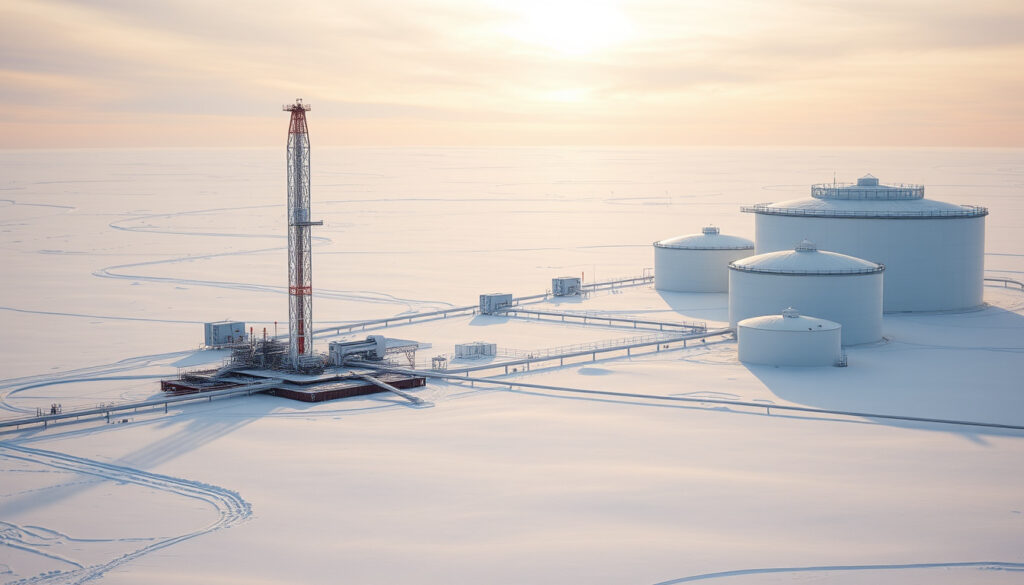
Gazprom White Hydrogen Extraction in Siberia: Updates
Gazprom quietly extracted several liters of naturally occurring hydrogen from the Kovyktinskoye gas field in Eastern Siberia in April 2025—a milestone that positions Russia as a potential low-cost producer of geologic hydrogen while challenging the expensive electrolyzer-based pathways that dominate green energy discussions.
Company: Gazprom ·
Location: Eastern Siberia ·
Field: Kovyktinskoye gas condensate field ·
Exploration Start: Oct 2024 ·
First Production: Apr 2025
Quick snapshot
- Exact extraction volume beyond “several liters”
- Commercial viability timelines beyond internal use
- Independent verification of the 3% concentration figure
- Oct 2024: Plans announced at IH2CON Moscow (News.az)
- Apr 15–16, 2025: First hydrogen extracted (Interfax)
- Planned large-scale helium output by 2025 (Akap Energy)
- Gazprom could build purification facilities if hydrogen demand grows
- Russia may position itself as a low-emission energy supplier to China
- Scaling depends on metal hydride tech viability at scale
Key figures and milestones for Gazprom’s white hydrogen project at Kovyktinskoye are summarized below.
| Label | Value |
|---|---|
| Explorer | Gazprom |
| Region | East Siberia |
| Key Field | Kovyktinskoye |
| Event 1 | Exploration announced Oct 2024 |
| Event 2 | First extraction Apr 2025 |
How is white hydrogen extracted?
White hydrogen refers to hydrogen that forms naturally underground through geological processes — no electrolyzers, no carbon capture systems required. That’s the key difference from green hydrogen (produced via water electrolysis) or blue hydrogen (derived from natural gas with carbon capture). The gas simply accumulates in rock formations over geological time, and the challenge lies in pulling it out efficiently.
Extraction methods
Two main technologies have emerged for separating hydrogen from other gases in a production stream: membrane-based separation and metal hydride systems. Membrane filtration uses selective barriers to let hydrogen pass while blocking other molecules — a method Gazprom has invested in for efficiency improvements, according to ChemAnalyst reporting. Metal hydride technology instead binds hydrogen atoms to metallic alloys, which can then be heated to release relatively pure hydrogen.
The choice matters enormously at Kovyktinskoye. Alexander Ishkov, Gazprom’s deputy department head, stated at the Eurasian Oil and Gas Forum that membrane technology isn’t suitable for extracting pure hydrogen because of the low concentration at Kovykta. The field’s gas stream contains only about 3% hydrogen, which falls below the threshold where membranes perform effectively. Metal hydride technology, by contrast, works at lower concentrations because it chemically captures hydrogen rather than relying on physical separation.
Metal hydride systems handle low-concentration streams, but scaling them to commercial volumes introduces cost and regeneration challenges that remain unsolved at Kovykta.
Gazprom’s process in Siberia
Gazprom’s hydrogen experience spans four decades — primarily through hydrocarbon processing at facilities like the Sosnogorsk plant in Komi. That expertise focused on hydrogen as a refining byproduct, not as a standalone product. Kovyktinskoye represents a different challenge: extracting hydrogen as a primary output from a gas field where it occurs naturally alongside methane, helium, nitrogen, and condensate.
The Irkutsk region’s geology appears favorable for hydrogen accumulation. Eastern Siberia and Yakutia host multiple fields with hydrogen traces, including Chayandinskoye, which also yields methane, propane, butane, ethane, and helium alongside hydrogen. Kovyktinskoye itself holds 1.8 trillion cubic meters of natural gas and 65.7 million tonnes of condensate alongside its 3% hydrogen fraction.
The extraction itself yielded several liters in the initial campaign, confirmed by Ishkov at the Eurasian Oil and Gas Forum. No commercial volumes have been reported, and Gazprom currently uses any hydrogen extracted internally rather than selling it into a nonexistent market for low-carbon hydrogen.
The implication is that laboratory success does not yet translate to a commercial product—the gap between “several liters” and meaningful export volumes remains substantial.
What are the benefits of white hydrogen?
The appeal of naturally occurring hydrogen is straightforward in theory: if the gas is already there, production costs could fall dramatically compared to electrolyzers running on renewable power. That economic argument underpins much of the interest in white hydrogen as an alternative to costly green energy pathways.
Sustainability advantages
White hydrogen extraction requires no water electrolysis, no significant electricity input for splitting molecules, and no carbon capture infrastructure. The carbon intensity, assuming well integrity throughout the process, could be substantially lower than blue hydrogen (which releases CO₂ during production) or green hydrogen (which demands large renewable power inputs for electrolysis).
Gazprom’s existing gas infrastructure in Eastern Siberia provides a head start. Kovyktinskoye already feeds the Power of Siberia pipeline, which carries gas to China, and production there targets 27 billion cubic meters annually. If hydrogen separation can be integrated into that workflow, the marginal carbon cost of hydrogen extraction might track with the company’s broader carbon reduction commitments.
Cost compared to green hydrogen
Green hydrogen produced via electrolysis currently costs significantly more than hydrogen derived from natural gas, even without carbon capture. Estimates vary by region and project, but the premium reflects the electricity costs required for water splitting. White hydrogen bypasses that expense if extraction costs remain low.
The wildcard is extraction technology. Metal hydride systems and the facilities needed to scale them represent capital investment that could erode the theoretical cost advantage. Gazprom could build purification facilities for commercial hydrogen if market demand emerges, per Interfax reporting, but no timeline exists for that decision.
If Russia successfully commercializes white hydrogen, it gains a low-emission export commodity without the electrolysis costs that plague green hydrogen projects elsewhere.
The pattern here favors early movers with existing upstream infrastructure—but only if separation costs can be brought down.
Which countries have white hydrogen?
White hydrogen deposits have been identified across several countries, though systematic exploration remains limited. Russia’s Siberian push enters a field where geological surveys have already documented hydrogen occurrences in other nations, with France holding notably large estimated reserves.
Key locations
Geological surveys have identified white hydrogen occurrences in the United States, Australia, France, Mali, and Russia. France’s estimated reserves have been cited at roughly $92 trillion in potential value, though such figures reflect theoretical resource assessments rather than confirmed producible reserves. Australia and the United States have ongoing research programs, while Mali’s hydrogen occurrences relate to specific geological formations in West Africa.
Russia’s advantage lies in existing upstream infrastructure. Kovyktinskoye, Chayandinskoye, and other Siberian fields already produce gas and associated components, meaning hydrogen exploration piggybacks on active operations rather than requiring greenfield drilling.
Russia’s role
Gazprom’s announcement positions Russia as a potential white hydrogen producer alongside established fossil fuel export infrastructure. Eastern Siberia and Yakutia host geology that reportedly favors hydrogen deposits, per reporting from Ecoticias, though independent geological surveys haven’t fully mapped the extent of these resources.
The geopolitical angle matters: Russia already exports pipeline gas to China via Power of Siberia, and hydrogen could theoretically follow the same corridors. White hydrogen extraction could position Russia as a low-emission energy supplier to China, according to ChemAnalyst analysis, provided extraction costs remain competitive and demand materializes.
What distinguishes Russia from other potential producers is the combination of existing infrastructure and known geological favorability.
Who has the largest hydrogen reserves in the world?
Definitive rankings of global white hydrogen reserves remain elusive because systematic exploration has barely begun. Most estimates reflect theoretical resource assessments rather than proven reserves, making cross-country comparisons difficult to verify.
White hydrogen reserves
France has attracted attention for white hydrogen potential, with estimated reserves cited at approximately $92 trillion in some assessments. However, these figures represent theoretical occurrences rather than confirmed producible volumes. Russia’s Siberian fields contain documented hydrogen fractions — Kovyktinskoye at 3% — but the total volume in place depends on how much gas exists across the region’s extensive fairway.
Unlike oil or conventional natural gas, hydrogen reserves haven’t been systematically assessed in most jurisdictions. Russia’s announcement doesn’t reflect a proven reserve figure; it’s a production milestone that suggests economic interest in further assessment.
Global leaders
Without comprehensive global surveys, “largest reserves” claims remain speculative. Russia’s advantage isn’t necessarily the size of its hydrogen resource base but rather the combination of existing infrastructure, known geological favorability, and state backing through Gazprom. The company’s Siberia operations already produce at scale, with Kovyktinskoye’s target capacity of 27 billion cubic meters annually providing a foundation for hydrogen co-production.
What distinguishes Russia from other potential producers is the alignment of existing gas infrastructure with hydrogen-bearing geology. Most other countries with identified white hydrogen occurrences lack comparable upstream systems already in place.
The catch is that reserve claims without systematic surveys remain marketing rather than geology.
What is the major downside of hydrogen power?
Hydrogen’s challenges differ depending on the production pathway, but white hydrogen faces specific hurdles that aren’t always visible in the enthusiasm around extraction announcements. Low concentration, separation technology costs, and a volatile market create a confluence of risks that could slow or prevent commercial scaling.
Challenges for white hydrogen
The 3% concentration at Kovyktinskoye illustrates the core problem: geological hydrogen rarely occurs at high purity. Unlike hydrogen produced through industrial processes (where concentration can be controlled), white hydrogen dilutes with methane, nitrogen, and other gases in the reservoir. Extracting useful volumes requires handling enormous quantities of gas to isolate meaningful amounts of hydrogen.
Gazprom has extracted several liters in initial testing, which suggests the separation technology works at laboratory scale. Scaling to commercial volumes introduces costs and complexities that haven’t been demonstrated. Metal hydride systems, while technically suitable for low concentrations, require regeneration cycles and handling infrastructure that add operational complexity.
Gazprom’s existing hydrogen production of 350,000 tons annually for internal use shows the company can produce hydrogen — but doing so from fossil fuel processing differs fundamentally from extracting it as a primary product from gas fields.
Infrastructure needs
Commercial white hydrogen would require purification facilities that don’t yet exist at Kovyktinskoye. Pipeline infrastructure for hydrogen transport differs from natural gas pipelines due to hydrogen embrittlement effects on steel. The Power of Siberia system wasn’t designed for hydrogen service, though future modification remains theoretically possible.
Perhaps the biggest infrastructure gap is market-oriented rather than physical. No commercial market demand exists for low-carbon hydrogen at scale, which is why Gazprom currently uses extracted hydrogen internally rather than selling it. Building purification facilities makes economic sense only if buyers materialize — and no such buyers have committed.
Upsides
- Potentially lower extraction cost than electrolytic green hydrogen
- Leverages existing gas infrastructure and expertise
- Russia’s geology appears favorable for hydrogen accumulation
- Could support carbon reduction targets for gas exports
Downsides
- Only “several liters” extracted — commercial scale unproven
- Metal hydride technology not yet scaled commercially
- No commercial market demand for low-carbon hydrogen
- Low concentration requires handling large gas volumes
The implication is that technology maturity and market development—not geology—will determine whether white hydrogen scales.
Gazprom’s White Hydrogen Extraction Steps
From initial announcement to first extraction, Gazprom moved from concept to laboratory-scale production in roughly six months — a compressed timeline that reflects the company’s existing upstream capabilities and hydrogen processing experience.
- Geological assessment — Identify fields with hydrogen-bearing gas streams. Kovyktinskoye and Chayandinskoye in Eastern Siberia host hydrogen fractions alongside methane and other components.
- Concentration analysis — Characterize hydrogen content in the production stream. At Kovykta, concentration runs approximately 3%, below membrane separation thresholds.
- Technology selection — Choose separation method suited to concentration level. Metal hydride technology, not membrane filtration, handles low-concentration hydrogen extraction.
- Pilot extraction — Extract initial hydrogen volumes for characterization. Gazprom obtained several liters in April 2025.
- Internal use or storage — Current hydrogen is consumed internally rather than sold, as no commercial market exists.
- Facility assessment — Evaluate whether purification facilities make economic sense if hydrogen demand grows.
The pattern shows a deliberate progression from existing capabilities toward new product lines—but each step faces unresolved technical and commercial questions.
Timeline
Gazprom’s white hydrogen program accelerated from announcement to initial production in roughly six months, though full commercial development remains unquantified.
| Date | Event |
|---|---|
| Oct 2024 | Gazprom announces white hydrogen extraction plans for Eastern Siberia fields |
| Oct 23, 2024 | Konstantin Romanov, CEO of Gazprom Hydrogen, reveals plans at IH2CON Moscow |
| Apr 15, 2025 | Gazprom produces first white hydrogen at Kovyktinskoye per Interfax |
| Apr 16, 2025 | Extraction confirmed publicly at Eurasian Oil and Gas Forum by Alexander Ishkov |
| 2025 | Planned large-scale helium production at Kovykta |
What this means is that Gazprom executed rapidly on a known technology gap—but the timeline says nothing about commercial viability.
Confirmed vs. Unclear
Sorting what we know from what’s uncertain helps calibrate expectations around Gazprom’s white hydrogen ambitions.
Confirmed
- Gazprom extracted several liters of hydrogen at Kovyktinskoye in April 2025
- Hydrogen concentration at Kovykta runs approximately 3%
- Kovyktinskoye holds 1.8 trillion cubic meters of natural gas
- Membrane technology unsuitable for extraction at Kovykta
- Gazprom uses hydrogen internally, no external sales
Unclear
- Exact extraction volumes beyond “several liters”
- Commercial scale-up timeline
- Whether purification facilities will be built
- Expansion plans to other fields (Chayandinskoye, Yakutia)
- Independent verification of hydrogen concentration figures
We’ve currently extracted several liters at the Kovykta field. It’s in low concentration.
— Alexander Ishkov, Gazprom department deputy head (Interfax)
Membrane technology isn’t suitable for extracting pure hydrogen because of the low concentration.
— Alexander Ishkov, Gazprom department deputy head (Interfax)
The natural hydrogen discoveries in Eastern Siberia could give Russia a competitive edge in global energy markets if extraction costs remain manageable.
— Konstantin Romanov, CEO of Gazprom Hydrogen (News.az)
Related reading: BP Share Price LSE · AQA A Level Chemistry
chemanalyst.com, pipeline-journal.net, qcintel.com, aperc.or.jp, ecoticias.com
As Gazprom advances white hydrogen extraction in Siberia’s Kovyktinskoye field, Gerhard Schröder’s Gazprom salary controversies underscore its global political entanglements.
Frequently asked questions
What are the pros and cons of hydrogen fuel cells?
Hydrogen fuel cells offer high energy density and fast refueling compared to batteries, making them attractive for vehicles and stationary power. However, hydrogen production often relies on fossil fuels, the fueling infrastructure is sparse, and fuel cell durability remains a concern. White hydrogen specifically could address the production cost issue if extraction scales.
Why doesn’t Elon Musk like hydrogen?
Tesla CEO Elon Musk has criticized hydrogen fuel cells repeatedly, arguing that battery electric vehicles are more efficient and that hydrogen production via electrolysis wastes energy. Musk’s core objection centers on round-trip efficiency: converting electricity to hydrogen, transporting it, and converting back to electricity loses roughly 40-50% of the original energy content.
What did Elon Musk say about hydrogen cars?
Musk has called hydrogen fuel cell vehicles “fool cells” and suggested they make more sense as rockets than cars. His critique focuses on the physics of hydrogen: its low density requires compression, and the energy needed to compress and cool hydrogen often exceeds what’s recovered when the fuel is used.
Is hydrogen fuel cheaper than gasoline?
Currently, hydrogen fuel is generally more expensive than gasoline on an energy-equivalent basis. Green hydrogen costs roughly $4-6 per kilogram in most markets, while gasoline equivalent runs around $1.50-2.50 per gallon. White hydrogen could theoretically reduce production costs, but the extraction and purification infrastructure needed for commercial volumes hasn’t been built.
Which country is leading in hydrogen?
No single country leads definitively across all hydrogen pathways. Australia and Chile have aggressive green hydrogen export strategies. The United States has federal hydrogen hubs in development. Germany is investing heavily in imports. Russia, with Gazprom’s white hydrogen push, aims to leverage existing gas infrastructure. The race involves multiple technologies and applications simultaneously.
More related posts
 Dean Martin: King of Cool’s Death, Funeral & Family
 How Old Is Demi Moore – Age, Family, Height and Career Facts
 Kanye We t and Bianca Cen ori: Split, Reunion & Timeline
 Dow Jones Share Price – Live DJIA Index, Futures & Market News
 Rod Stewart Net Worth 2025: Music Career and Assets
 Auld Lang Syne Meaning: Lyrics, Translation & Origins
 John Wick 5 Confirmed 2028 – Release Date and Updates
 Chennai Super Kings vs Gujarat Titans Timeline – Head-to-Head Record 2022-2024