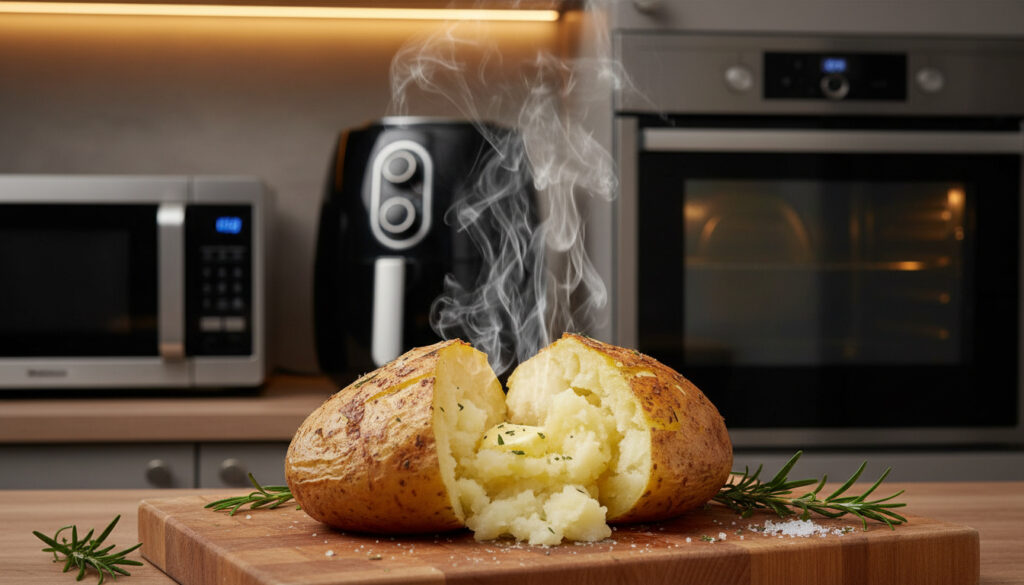
How to Cook Jacket Potato – Oven, Microwave and Air Fryer Guide
The jacket potato stands as a cornerstone of British comfort cuisine, distinguished by its steamy, fluffy interior and shatteringly crisp golden skin. Mastering this deceptively simple dish requires precise control over starch gelatinization, moisture evaporation, and heat distribution. While traditional methods demand patience, contemporary hybrid techniques now deliver comparable textural perfection in significantly reduced timeframes.
Success begins with varietal selection. Large, starchy cultivars such as King Edward or Maris Piper provide the ideal cellular structure for achieving the signature contrast between crackling exterior and airy flesh. Proper preparation prevents dangerous steam buildup while ensuring even thermal penetration throughout the tuber.
Whether employing conventional oven baking, microwave acceleration, or convection air frying, each methodology offers distinct advantages regarding skin development and time efficiency. The following examination presents evidence-based techniques for consistently producing restaurant-quality results in domestic settings.
Which Method Delivers Optimal Results?
| Method | Duration | Advantages | Limitations |
|---|---|---|---|
| Traditional Oven | 45-60 minutes | Superior skin crispiness | Significant time investment |
| Microwave Alone | 6-20 minutes | Rapid cooking | Soft, chewy skin |
| Air Fryer Solo | 30-60 minutes | Crisp skin, energy efficient | Capacity limitations |
| Hybrid (Microwave + Air Fryer) | 15-35 minutes | Speed with crisp texture | Requires two-stage process |
- Prick potato skins repeatedly with a fork to prevent steam pressure accumulation.
- Rub surfaces with high smoke-point oil and sea salt to promote Maillard reactions.
- Rest cooked potatoes for five minutes before serving to redistribute internal moisture.
- Maintain single-layer placement in air fryer baskets to ensure proper air circulation.
- Select King Edward or Maris Piper varieties for maximum fluffiness.
- Test doneness by piercing with a knife; the blade should encounter minimal resistance.
- Cool microwaved potatoes briefly before finishing in high-heat environments.
| Optimal Varieties | King Edward, Maris Piper |
|---|---|
| Oven Temperature | 190°C (375°F / Gas Mark 5) |
| Air Fryer Temperature | 200°C (400°F) |
| Microwave Duration (Medium) | 6-10 minutes |
| Microwave Duration (Large) | 16-20 minutes |
| Hybrid Total Duration | 15-35 minutes |
| Resting Period | 5 minutes |
| Caloric Content (Plain) | Approximately 160 kcal |
How Should You Prepare Potatoes for Baking?
Varietal selection fundamentally determines textural outcomes. Starchy varieties like King Edward or Maris Piper contain the amylose content necessary for fluffy interiors and crispy skins, making them preferred for British-style preparations.
Cleaning and Piercing Protocols
Thorough washing removes soil and agricultural residues from the skin surface. Remove any eyes or sprouts, then pat completely dry to prevent steaming during initial cooking phases. Multiple fork pricks distributed across the surface allow steam escape and prevent pressure-induced bursting.
Large, starchy varieties like King Edward or Maris Piper create the fluffiest interiors and crispiest skins ideal for British-style jacket potatoes.
What Are the Specific Cooking Techniques?
Conventional Oven Method
Preheat the oven to 190°C (375°F / Gas Mark 5). For hybrid approaches, microwave potatoes for 6-10 minutes until centers approach doneness and skins wrinkle, then transfer to the preheated oven for additional baking to crisp the skin.
Microwave Acceleration
Place pricked potatoes on microwave-safe plates. Cook on full power for 6-10 minutes for medium potatoes, 16 minutes for large varieties, or up to 20 minutes, testing with a fork for softness. Turn halfway through cooking to ensure even heating. The skin remains soft without subsequent high-heat exposure.
Air Fryer Technique
Brush potatoes with high smoke-point oil such as avocado, canola, or sunflower, then sprinkle with sea salt. Air fry at 200°C (400°F) for 30-40 minutes, flipping halfway through. Large potatoes require approximately 60 minutes without microwave preheating. Check doneness by piercing with a knife; the blade should slide easily through the center.
Hybrid Methodology
Combining microwave and air fryer cooking yields fluffy interiors with crispy golden-brown skins in under 35 minutes. Microwave first as described, then cool slightly—either in the refrigerator for 10 minutes or outdoors in winter conditions. Brush with oil (approximately 1 teaspoon per potato), season with salt and pepper, then air fry at 180-200°C (360-400°F) for 10-15 minutes total, flipping as needed. This approach halves cooking duration compared to air fryer-exclusive methods.
How Do You Achieve Perfect Texture?
Oil and salt application proves essential for developing crunch; rub evenly across the entire surface. The combination of fat and sodium draws moisture from the skin while promoting caramelization. For maximum crispiness, utilize the air fryer’s “max fry” setting rather than standard roast functions.
Air fryer baskets require strict single-layer arrangement; stacking potatoes prevents proper air circulation and results in unevenly cooked, soggy skins.
A perfectly cooked jacket potato yields easily to knife penetration with the blade sliding smoothly through the flesh while the skin displays a uniform golden-brown coloration.
What Is the Step-by-Step Cooking Process?
- Select large, starchy potatoes such as King Edward or Maris Piper.
- Preheat the oven to 190°C (375°F) or air fryer to 200°C if using those methods.
- Wash thoroughly, remove eyes or sprouts, and pat completely dry.
- Prick potato skins multiple times with a fork to allow steam escape.
- Microwave medium potatoes for 6-10 minutes or large ones for 16-20 minutes if using hybrid methodology.
- Cool slightly (10 minutes in refrigerator or outdoor winter air) before finishing.
- Brush or rub with high smoke-point oil and sprinkle with sea salt.
- Transfer to oven for 20-30 minutes, or air fry at 180-200°C for 10-15 minutes.
- Test doneness by piercing with a knife; the blade should slide easily through.
- Rest for five minutes before cutting open and adding toppings.
What Is Definitive vs. Uncertain About These Techniques?
| Established Information | Uncertain or Variable Factors |
|---|---|
|
|
What Is the Cultural Background of the Jacket Potato?
The jacket potato represents a foundational element of British culinary heritage, though specific historical documentation regarding the terminology’s origin remains limited within available sources. The designation “jacket” refers to the skin-on preparation method that preserves the potato’s natural wrapper, yielding both convenience and the textural contrast between crispy exterior and fluffy interior.
Nutritionally, a medium plain baked potato provides approximately 160 calories alongside significant potassium, vitamin C, and dietary fiber content. Starchy varieties enhance these nutritional benefits while providing the characteristic texture profile. Toppings such as butter, cheese wedges, baked beans, tomatoes, or chutney transform the vegetable into a complete meal, though these additions substantially alter the caloric and fat content.
What Do Culinary Sources Recommend?
“Large, starchy varieties like King Edward or Maris Piper are ideal for jacket potatoes in the UK.”
— J Cooking Odyssey
For a delicious way to prepare this cut, learn how to Steka rimmat fläsk i airfryer.
“Microwave first for 6-10 minutes, then transfer to oven for additional baking to crisp skin.”
— Easy Cheesy Vegetarian
“This combo yields fluffy inside, crispy golden-brown skin in under 35 minutes total.”
— Recipe This
What Defines the Ideal Jacket Potato?
The perfect jacket potato balances a shatteringly crisp, well-seasoned exterior with a light, steamy interior, achieved through proper variety selection and methodical heat application. Whether opting for the traditional 45-60 minute oven approach or the efficient 15-35 minute hybrid method, success depends upon selecting starchy cultivars, adequately venting steam through surface pricking, and applying oil and salt before the final crisping stage. Those seeking additional kitchen equipment beyond basic cutlery might visit a hardware store near me, while considering alternative dining experiences such as The Ivy Asia Leeds menu for comparative culinary contexts.
Frequently Asked Questions
Can you cook a jacket potato entirely in the microwave?
Yes, though the skin remains soft rather than crispy. Cook medium potatoes for 6-10 minutes or large ones for 16-20 minutes, turning halfway through cooking.
Why must you prick a jacket potato before cooking?
Pricking allows steam to escape during heating, preventing pressure buildup that could cause the potato to burst during the cooking process.
Which oil works best for crispy skin?
High smoke-point oils including avocado, canola, vegetable, sunflower, or olive oil spray withstand the high temperatures needed for crisping without burning or smoking.
How do you know when a jacket potato is fully cooked?
A knife or fork should slide easily through the center with minimal resistance, and the skin should display a uniform golden-brown coloration.
Can sweet potatoes be cooked using these methods?
Yes, though cooking times require adjustment due to differing moisture and sugar content compared to standard starchy potatoes.
What temperature should an air fryer be set to?
Set the air fryer to 200°C (400°F) for standalone cooking, or 180-200°C (360-400°F) when using the hybrid microwave-then-air-fry method.
Is resting the potato necessary?
Allowing the potato to rest for approximately five minutes after cooking helps redistribute steam and moisture, resulting in a fluffier interior texture.
What toppings create a complete meal?
Traditional combinations include butter and cheese wedges, baked beans with tomatoes, hard-boiled eggs, chutney, onion, and salad.
More related posts
 Shadow of the Tomb Raider: The Final Chapter Explained
 Mobile Tyres Near Me: Cost, Time & Drawbacks Explained
 Money Transfer Credit Card: How to Send Money & Best Cards
 Lucy Connolly: Verified Facts on Jail, Appeal, Release
 Drayton Manor Discount Code: Save with Tesco Clubcard & More
 Grecotel Luxme Daphnila Bay – Adults-Only Luxury Resort Crete
 Sky Customer Service Numbers: 0333, Free 0800 and Opening Times
 Hardware Store Near Me – Open Stores, Hours and Directions Guide