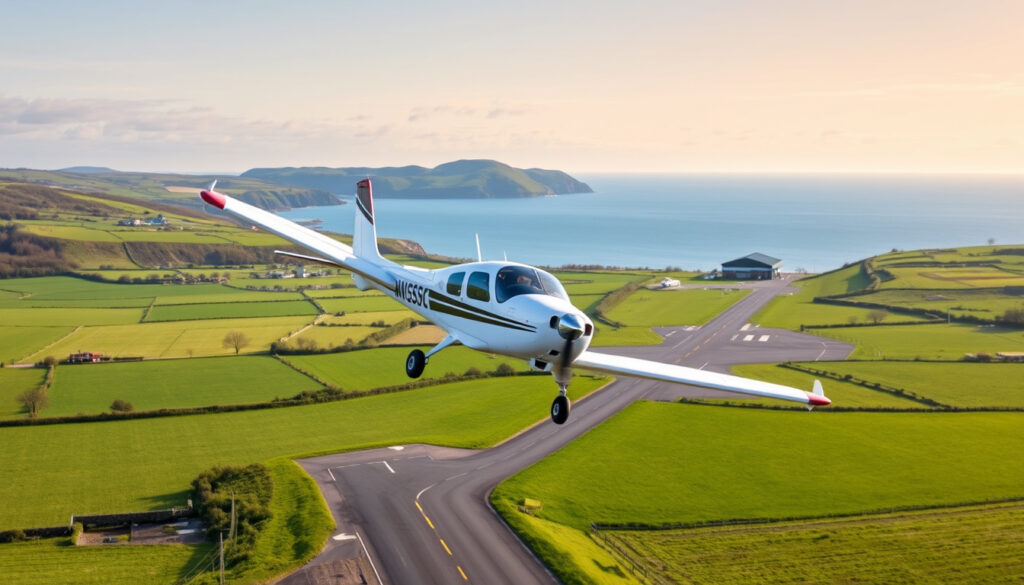
How to Become a Pilot in Ireland: Qualifications & Training
If you’ve ever watched a plane bank hard over Dublin and thought “I could do that,” you’re in good company. Thousands of Irish students consider flight school every year, and the good news is that becoming a commercial pilot here is more structured than you might expect. Between airline cadet programmes, military cadetships, and the direct regulatory route, there are actually several real pathways—and the Irish Aviation Authority (IAA) oversees them all with clear, published standards. This guide walks you through what qualification you actually need, how long training takes, and where the money and opportunity really are.
Minimum Education: Level 7 degree or aviation apprenticeship ·
Training Duration: 16+ months ·
Key Requirements: Medical standard, theoretical knowledge, flight training ·
Pathways: Airline programmes, military cadetships ·
Authority: Irish Aviation Authority (IAA)
Quick snapshot
- Airline and military training routes both exist in Ireland (Ryanair, Irish Air Corps)
- The IAA sets medical, theory, and flight requirements for pilot licensing (Ryanair)
- EASA Part FCL licence became mandatory for EU residents on 20th June 2022 (Flying in Ireland)
- Precise commercial pilot salary ranges in the Irish market lack published official data
- Specific medical issuance rules for conditions like epilepsy under current IAA standards
- Selection rates and competition ratios for major airline cadet programmes
- Bristow Ireland launched a SAR pilot cadet programme in 2025 (Flying in Ireland)
- Aer Lingus Future Pilot Programme requires 18-year age threshold by application deadline (Aer Lingus Careers)
- Ryanair can take cadets to commander in 4–5 years from initial type rating (Ryanair Careers)
- TUI Airline runs a 19-month MPL Cadet Programme for those with little or no experience (TUI Careers)
- The modular route through PPL to ATPL costs between £70,000 and £130,000 (Pilot Path Group)
- Military cadets receive sponsored training and officer leadership development (TUI Careers)
| Requirement | Detail | Source |
|---|---|---|
| Governing Body | Irish Aviation Authority (IAA) | Pilot Path Group |
| Fastest Training | 16+ months (Ryanair) | Ryanair Careers |
| Education Minimum | Level 7 degree | Pilot Path Group |
| Core Elements | Medical, theory, flight training | Pilot Path Group |
| PPL Minimum Age | 17 years old | Pilot Path Group |
| ATPL Minimum Age | 21 years | Pilot Path Group |
| Training Cost Range | £70,000–£130,000 | Pilot Path Group |
What qualifications do I need to be a pilot?
The IAA requires three things before you can fly commercially in Ireland: a prescribed medical standard, proof of theoretical knowledge, and completed flight training. Most aspiring pilots start with the Private Pilot Licence (PPL) as their first milestone—it covers aviation regulations, aerodynamics, meteorology, navigation, aircraft systems, flight planning, and human factors. You need to be at least 17 years old, hold a valid medical certificate, and demonstrate English proficiency to qualify for a PPL.
Education requirements
For the airline cadet route, you’ll typically need a Level 7 degree or equivalent. The Aer Lingus Future Pilot Programme, for instance, requires applicants to be 18 years of age on or before the application deadline, fluent in written and spoken English, and eligible to live and work permanently in Ireland. TUI’s MPL Cadet Programme asks for at least five GCSEs and a minimum age of 18. The military route via the Irish Air Corps cadetship looks at your overall Leaving Certificate points and physical fitness rather than specific degree credentials.
No prior flight experience is required for most airline cadet programmes—but without a degree or strong Leaving Cert results, you’ll struggle to get through the initial selection. Airlines recruit for attitude and aptitude, not cockpit hours.
Medical standards
Every pilot needs a medical certificate, and the class depends on what you want to fly. Class 1 is required for commercial airline work, Class 2 for private pilots, and a special Medical Exception Dispensation (MEDA) may apply for certain conditions. The Bristow SAR cadet programme explicitly requires a valid Class 1 UK Flight Crew Medical Certificate, and applicants must be Irish residents and over 18. Medical standards are strict but not absolute—conditions like epilepsy require individual assessment rather than automatic disqualification.
Theoretical knowledge
Commercial pilot training for a Frozen ATPL requires passing 14 ATPL theoretical exams, completing a Multi-Engine CPL with Instrument Rating, a Jet Orientation Course, and a Multi-Crew Cooperation Course. The night rating, which allows VFR flying after dark, requires a minimum of 5 hours flight training (including 3 hours dual instruction), a cross-country flight of at least 27 nautical miles, and 5 full-stop solo landings—no formal test at the end. Night ratings carry lifetime validity once earned.
The flight training syllabus is demanding—14 theoretical exams, simulator sessions, and solo cross-country flights all have to slot into a coherent timeline. Multiple exams for a 40-year career means the investment pays off over decades, not months.
— Aviation training overview, Pilot Path Group Ireland
The implication is that choosing a structured cadet programme protects you from the piecemeal cost and uncertainty of self-funding.
How long does it take to become a pilot?
The honest answer depends on your route. Integrated flight training programmes can get you to commercial standard in 16 months or more, while the modular route—where you train part-time while working—typically stretches to 2–3 years. Full ATPL training, including 14 theoretical exams, multiple flight ratings, and simulator sessions, can take 18–24 months if you commit full-time. The minimum age to acquire an ATPL in Ireland is 21 years.
Flight training timeline
From PPL to CPL with Instrument Rating typically involves 45 hours of PPL flying, followed by 155 hours of commercial training, plus 50 hours of instrument instruction. Night rating adds another 5 hours minimum. The TUI MPL Cadet Programme runs for 19 months and takes candidates with little or no flying experience all the way to Multi-Crew Pilot Licence standard, with graduates eventually joining TUI as Cadet Pilots flying the Boeing 737.
Full programmes duration
The Ryanair Cadet Programme can take cadets from zero hours to commander in 4–5 years from the initial type rating course. Their Mentored APS MCC Course through Airline Flight Academy in Dublin costs EUR 5,995 and includes 16 hours of computer-based training, 40 hours of classroom theory, 40 hours of simulator time, and 20 hours of briefing—all performed on a Boeing 737 MAX simulator.
Ireland-specific paths
Ireland offers three distinct routes: airline programmes (Aer Lingus, Ryanair, TUI), military cadetship (Irish Air Corps), and the direct regulatory path through approved flight training schools. Bristow Ireland launched its first Search and Rescue pilot cadet programme in 2025, recruiting four candidates for a fully sponsored two-year course based primarily at Gloucester Airport in the UK, with deployment to Irish SAR bases at Shannon, Sligo, Waterford, or Weston upon completion.
The pattern here is that the shortest timelines belong to airline-sponsored cadets, while self-funded modular routes trade time for flexibility.
The Irish Air Corps cadetship isn’t just about flight hours—it’s about building command presence and leadership under pressure. Those skills translate directly to the cockpit of a commercial airliner, which is why military-trained pilots remain highly valued by airlines.
— Irish Defence Forces (military.ie)
Do pilots make good money?
Commercial pilots can earn substantial salaries, particularly once they build seniority and log hours with major carriers. Captains at established airlines frequently earn well into six figures, and some report incomes exceeding $200,000 annually at peak career stages. The path to those figures is long and expensive upfront—ATPL training costs between £70,000 and £130,000—but the earning potential reflects the responsibility and training investment.
Average commercial pilot salary
Precise Irish market data for commercial pilot salaries is not publicly published in a centralized format, making it difficult to cite exact figures with confidence. Industry reports suggest that first officers at regional carriers typically start in the €40,000–€70,000 range, while captains at major airlines can command €120,000–€200,000 or more depending on the airline and aircraft type. The key variable is seniority: the longer you fly for one carrier, the more your pay increases through defined career progression scales.
Ryanair’s cadet pathway can get you to commander rank—the highest-paid role—in as little as 4–5 years from initial type rating, which is faster than many industry observers expected. For pilots who want to maximise lifetime earnings, the route to captaincy matters as much as the starting salary.
High earners
The aviation industry’s highest earners are typically airline captains flying widebody aircraft on long-haul routes, or senior first officers with significant seniority at major carriers. Some pilots who build careers across multiple contracts or reach management-level positions report seven-figure lifetime earnings. However, the route to those figures requires thousands of hours of flight time, repeated training costs, and career patience.
Ireland pilot salary
Irish commercial pilots fall under EASA regulations and IAA licensing, with salaries typically benchmarked against European market rates. The Ryanair, Aer Lingus, and TUI cadet programmes all offer structured progression where pay scales increase with rank and type ratings. Bristow SAR pilots operating the AW189 for Irish Search and Rescue work on a different pay structure tied to government contracts, which tends to be competitive but more stable than airline performance bonuses.
What this means is that Irish pilots earn European market rates, with the highest ceiling reserved for those who reach captain rank at major carriers.
Is 25 too late to become a pilot?
No—you can absolutely start pilot training at 25 or even later. The minimum age for PPL training is 17, and the ATPL minimum is 21, but there’s no upper age limit for entering commercial aviation. What matters more than age is your financial situation, medical fitness, and ability to commit to the training timeline. Many people change careers in their late twenties and thirties and successfully qualify as commercial pilots.
Age considerations
Airlines do not typically impose age limits on cadet programme applicants beyond the minimum threshold—most programmes require you to be at least 18. However, retirement ages in commercial aviation (typically 65 under most airline contracts) do create a practical window: the later you start, the fewer peak-earning years you’ll have before mandatory retirement. At 25, you still have a 40-year career ahead of you if you qualify by 28–30, which is well within industry norms.
Time to qualify
If you start at 25 and pursue an integrated training programme, you could reasonably hold a commercial pilot licence by 27–28. Airline cadet programmes typically run 16–24 months to first officer status, and seniority accrues from your first airline flight, meaning earlier qualification directly translates to faster pay progression. The key is choosing a programme that doesn’t require you to self-fund the full £70,000–£130,000 ATPL cost, which is where airline cadetships shine—they’re sponsored.
At 25, self-funding a modular ATPL is financially harder than it is at 18—your living costs are higher, and you’ve lost years of potential earnings. Airline cadet programmes eliminate this problem by paying you a stipend during training. If you’re over 25 and self-funding, consider the 16-month integrated route rather than a three-year modular programme to reduce the total time without airline income.
Can I be a pilot in 2 years?
Yes, if you’re willing to go full-time and have the financial backing. Integrated programmes at approved training schools can take you from zero experience to CPL/IR in 16–18 months. The TUI MPL Cadet Programme runs 19 months. However, the 2-year window only covers getting your licence—not building the 1,500 hours of flight time typically required for an airline first officer position. Airlines hire cadets before they reach full hours, using type ratings as the bridge between licence and cockpit.
The catch is that the 2-year qualification clock starts only after you secure funding or a cadet place—both of which can take months or years to arrange.
How to become a pilot in Ireland?
Ireland offers three viable pathways to commercial pilot status, and the right one for you depends on your finances, age, and preferred working environment. The airline route is fastest for those who get accepted; the military route offers sponsorship and leadership training; the direct regulatory route offers flexibility but requires self-funding. All three lead to an IAA-issued EASA Part FCL licence, which is your key to flying commercially in Europe.
Airline programmes
Aer Lingus, Ryanair, and TUI all run cadet programmes with their own application processes. Aer Lingus’s Future Pilot Programme requires applicants to be 18 by the deadline, fluent in English, and eligible to work permanently in Ireland—prior flight experience is not listed as a requirement. TUI’s MPL programme explicitly targets those with little or no flying experience and runs for 19 months, with cadets joining TUI as Cadet Pilots flying the Boeing 737. Ryanair partners with Airline Flight Academy for their mentored APS MCC course, which costs EUR 5,995 as a standalone module or is integrated into their broader cadet pathway.
- Aer Lingus Future Pilot Programme — direct entry for school-leavers and graduates
- TUI MPL Cadet Programme — 19-month structured path from zero experience
- Ryanair B737 Cadet Programme — fast-track to commander in 4–5 years
- Bristow SAR Cadet — fully sponsored, 2025 intake of four candidates
Military cadetships
The Irish Air Corps Pilot Cadetship offers a route into aviation through military service. Cadets receive basic military training at the Curragh in County Kildare, followed by flight training including aerobatics and precision formation flying—all sponsored. The Irish Defence Forces Flying Training School shapes the programme, and graduates typically remain in military aviation or transition to civilian careers. This route suits applicants who want a structured military career alongside their pilot training, and it removes the upfront financial burden of self-funding.
Regulatory steps
If you prefer the direct route, you’ll work through the IAA’s licensing requirements step by step. Start with a Class 2 medical, complete PPL training at an approved school, add your night rating, then pursue CPL with Instrument Rating. The 14 ATPL theoretical exams can be taken through ground school or self-study. Once you hold CPL/IR, you need a Type Rating for the aircraft you’ll fly commercially, and most cadets join airline programmes that provide this training as part of their cadet contract.
Upsides
- Multiple funded pathways (airline cadetships, military) reduce upfront costs
- IAA and EASA licensing is internationally recognised across Europe
- Career progression to six-figure captain salaries is well-documented
- Structured programmes exist for complete beginners with no flight hours
- Irish cadets benefit from proximity to major European airline hubs
Downsides
- ATPL training costs £70,000–£130,000 if self-funding
- Medical standards are strict and require ongoing renewal
- Airline cadet selection is competitive with no guaranteed intake
- Self-funded pilots face years without airline-level income
- Retirement age of 65 limits total career span if qualification is delayed
The implication is that the £100,000 upfront cost is the real gatekeeper—those without savings or cadet programme acceptance need a clear funding strategy before beginning training.
Related reading: How to become a pilot in Ireland · EASA pilot licensing requirements changes
Prospective Irish pilots training under IAA rules will find familiar ground in the FAA pilot certification steps, which detail core licenses and progression common to aviation worldwide.
Frequently asked questions
What is the Leaving Cert points requirement for pilots?
There is no official published Leaving Certificate points threshold for pilot licensing itself, but airline cadet programmes like Aer Lingus and Bristow Ireland look for “strong” Leaving Certificate results as part of their selection criteria. Specific point cut-offs are not publicly disclosed. For the Irish Air Corps cadetship, competitive scores are expected, but the Defence Forces also weigh physical fitness and aptitude test performance heavily.
Can a pilot fly 7 days in a row?
Under EASA regulations, pilots are subject to flight time limitations that restrict consecutive days of flying. The standard duty period limits mean pilots cannot typically fly 7 days in a row without breaching fatigue rules. The specific rules depend on the airline’s operations specifications, but EASA FTL (Flight Time Limitations) are designed to prevent fatigue-related incidents by mandating rest periods.
How to become a pilot with Emirates?
Emirates recruits pilots through its own selection process and typically requires significant prior experience—often 3,000+ hours for first officer positions, including substantial multi-crew turbine time. Emirates does not run a traditional cadet programme for international applicants. Irish pilots interested in Emirates must build their hours and experience through other airlines first, typically starting with European regional carriers before applying to Middle East airlines.
Can a pilot be a millionaire?
Pilots can accumulate significant wealth over a 35–40 year career, particularly captains at major airlines earning €120,000–€200,000 annually at peak seniority. Whether this constitutes millionaire status depends on savings rate, investment choices, and lifestyle. The path to high earnings starts 5–10 years after qualification, once you reach captain rank or build seniority at a well-paying carrier. The investment in training (£70,000–£130,000) is substantial but typically recouped within 10–15 years of full airline employment.
What pilots make $200,000 a year?
Captains at major airlines—especially long-haul carriers operating widebody aircraft—frequently report annual earnings in the $200,000–$350,000 range (or equivalent in euros/pounds) at senior grades. The figure varies by airline, aircraft type, and contract structure. First officers with significant seniority at major carriers can also reach this range. Irish airline captains at Aer Lingus and Ryanair earn competitive European salaries that, with seniority, approach these figures.
Can you be a pilot with epilepsy?
Epilepsy is a condition that requires individual medical assessment under IAA and EASA standards. It does not automatically disqualify an applicant, but each case is evaluated based on the specific diagnosis, treatment, and medical history. A Medical Exception Dispensation (MEDA) may be granted in certain circumstances. The key is that the IAA assesses each case individually rather than applying blanket exclusions, so aspiring pilots with epilepsy should consult an aviation medical examiner directly.
How many points to be a pilot in Ireland?
There is no fixed points threshold for pilot licensing in Ireland—the IAA does not use Leaving Certificate points as a metric for licence issuance. However, airline cadet programmes and the Irish Air Corps cadetship do consider academic performance as part of selection. Bristow Ireland’s SAR cadet programme specifically requires “strong Leaving Certificate points” without publishing a specific number. The practical answer is: check each programme’s published entry requirements, as they vary.
For anyone weighing the pilot route in Ireland, the choice is becoming clearer: airline cadetships are the most financially viable entry point for those without £100,000 to self-fund training. The military route offers sponsorship with added leadership credentials. And for those committed to the direct regulatory path, the investment is real but so is the return—a commercially rated pilot with EASA Part FCL licensing has access to every major European airline’s recruitment pool, making the early years of training the biggest barrier between you and the flight deck.
More related posts
 How Old is Renée Zellweger? Age 56 Bio & Updates 2025
 K-Pop Demon Hunters – Plot, Cast & Netflix Release
 Man United vs Fulham – Kick-Off Time, Prediction and H2H
 Ca t of The Little Mermaid (2023 Film): Full Li t, Role & In ight
 Permanent Resident: Definition, Duration & Comparison
 BT Business Contact Number: Official Phone & Support
 Madea’s Big Happy Family – Cast, Plot & Where to Watch
 Can You Take Paracetamol on an Empty Stomach? Yes, Safely