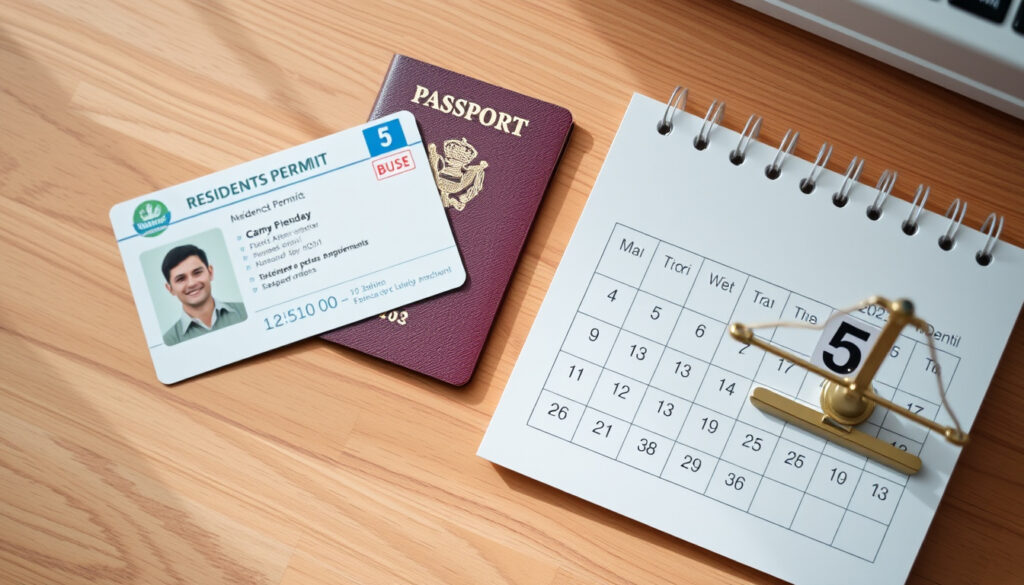
Permanent Resident: Definition, Duration & Comparison
Ask someone what a permanent resident is, and the answer shifts depending on which country they call home. In the US, a green card gives you the right to live and work indefinitely—but you’ll need to renew it every 10 years, and this guide compares how permanent residency works in Ireland, the United States, and Australia, and why the word “permanent” comes with more strings attached than you might expect.
Continuous residence required for Irish permanent residency (non-EEA): 5 years ·
EU citizens’ qualifying period for automatic permanent residence in Ireland: 5 years ·
US Green Card renewal period: Every 10 years
Quick snapshot
- Ireland grants permanent residence after 5 years continuous legal residence for EU citizens (Citizens Information (Ireland’s official public service)).
- US Green Card is valid for 10 years and renewable (USCIS (U.S. immigration authority)).
- Permanent residency can be revoked for prolonged absence or criminal conviction (USCIS). (Citizens Information (Ireland’s official public service))
- Exact costs for permanent residency applications vary by country and individual case (USCIS). (NASC Ireland (immigrant support NGO))
- Whether Stamp 4 leads to permanent residence depends on ongoing policy (NASC Ireland (immigrant support NGO)).
- Whether the points-based system for proving residence will be applied consistently across all applicants is not fully documented (NASC Ireland). (NASC Ireland (immigrant support NGO))
- Ireland: non-EEA nationals need 5 years continuous legal residence (Citizens Information). (Australian Department of Home Affairs (Australian government immigration authority))
- US: Green Card renewal every 10 years (USCIS). (Australian Department of Home Affairs (Australian government immigration authority))
- Australia: permanent visa holders must hold visa for 12 months before citizenship (Australian Department of Home Affairs (Australian government immigration authority)).
- Application for citizenship after meeting residence requirements (USCIS).
- Policy changes: Ireland raised protection-holder citizenship period to 5 years in December 2025 (Envoy Global (global immigration advisory firm)).
Five key facts define permanent residency across the three countries, one pattern: the status is never truly unconditional.
| Label | Value |
|---|---|
| Definition | A non-citizen with indefinite legal residence in a country. |
| Key Right | Live and work in the country without time limit. |
| Key Limitation | Cannot vote or hold public office. |
| Ireland (non-EEA) | 5 years continuous legal residence required (Irish Immigration Service Delivery (Ireland’s government immigration authority)). |
| US Green Card Renewal | Every 10 years (USCIS). |
| Australia permanent residence | Indefinite stay, but travel facility expires after 5 years (Australian Department of Home Affairs). |
| EU citizens in Ireland | Automatic permanent residence after 5 years (Citizens Information). |
| US naturalization eligibility | After 5 years of permanent residence; 3 years if married to US citizen (USCIS). |
What is the meaning of permanent resident?
A permanent resident is a non-citizen granted the right to live and work indefinitely in a country. But the label “permanent” masks conditions that vary by jurisdiction.
Definition of permanent resident
- A permanent resident is a non-citizen with indefinite legal residence (USCIS).
- They may be subject to conditions like physical presence requirements.
- Permanent residents cannot vote or hold certain official positions.
Key rights and limitations
- Right to work and live without time limit (USCIS).
- Cannot vote in national elections.
- Subject to deportation for serious crimes.
Difference from temporary residency
- Temporary residency has fixed duration; permanent residency is indefinite but revocable.
- Permanent residents have a clearer path to citizenship.
- Temporary visa holders cannot usually apply for citizenship directly.
The pattern: the core benefit—indefinite stay—is real, but the fine print includes obligations that keep the status from being truly unconditional.
What is a permanent resident in Ireland?
Ireland does not issue a “permanent residence card” for most non-EEA nationals; rather, they rely on Stamp 4 and naturalisation paths. The distinction matters for planning.
Eligibility for Irish permanent residency
- Non-EEA nationals can apply after 5 years continuous legal residence (Citizens Information).
- EU citizens automatically qualify after 5 years of continuous residence.
- Applicants must provide documents totalling at least 150 points per year via a points-based system (NASC Ireland).
Stamp 4 vs permanent residence
- Stamp 4 is a long-term residency permission, not permanent residence.
- Holders of Stamp 4 can work and live indefinitely but must renew permission.
- Permanent residence in Ireland is effectively achieved through naturalisation (citizenship) for non-EEA nationals.
Application process for non-EEA nationals
- Proof of residence in the 12 months immediately before application plus 4 other years in the previous 8 years (Irish Immigration Service Delivery).
- Since December 2025, refugees and international protection holders must wait 5 years (previously 3) (Envoy Global).
- Naturalisation requires 5 years reckonable residence out of the last 9 years (Citizens Information).
Why this matters: Ireland’s system treats “permanent residency” as a stepping stone to citizenship rather than a terminal status—a crucial distinction for long-term planning.
Is permanent residency for life?
Conditions under which permanent residency can be lost
- Prolonged absence from the country can lead to loss (USCIS).
- In the US, absence intended as abandonment voids the status.
- Australia requires permanent residents to hold a valid visa and meet residency criteria.
Reasons for revocation
- Criminal convictions can lead to deportation.
- Fraud in the application process.
- Failure to renew (US Green Card must be renewed every 10 years).
Comparison with citizenship permanence
- Citizenship is usually permanent unless actively renounced.
- Permanent residents face deportation risks; citizens generally do not.
- Citizens hold passports and can vote—rights permanent residents lack.
The catch: permanent residency offers stability, but only citizenship provides true permanence against removal.
How long can you be a permanent resident?
Duration rules vary by country
- Ireland: indefinite for EU citizens; non-EEA must naturalise to maintain status.
- US: indefinite but Green Card must be renewed every 10 years (USCIS).
- Australia: indefinite stay, but travel facility valid for only 5 years (Australian Department of Home Affairs).
Renewal and maintenance requirements
- US Green Card must be renewed every 10 years.
- Some countries impose minimum physical presence to maintain status.
- Australia requires permanent residents to hold a valid permanent visa.
Example: US Green Card validity
- Valid for 10 years, renewable.
- Absence over 1 year may be considered abandonment.
- Permanent residents can apply for citizenship after 5 years (3 years if married to US citizen) (USCIS).
The implication: even indefinite statuses require periodic action from the holder—renewals, physical presence, or eventual naturalisation.
Is it better to be a permanent resident or citizen?
Permanent residents get many economic rights but lack political voice and face vulnerability. Citizens gain full rights but must commit to the country at a deeper level.
Comparison of rights and obligations
- Citizens can vote and hold a passport; permanent residents cannot.
- Both pay taxes (USCIS).
- Permanent residents may face deportation risks; citizens generally do not.
Travel and passport differences
- Citizens hold a passport of the country, allowing visa-free travel to more destinations.
- Permanent residents use their national passport and may need visas.
- US permanent residents can travel abroad but must not intend to abandon residence.
Path to citizenship
- Ireland: 5 years reckonable residence (Citizens Information).
- US: 5 years (or 3 years if married to US citizen).
- Australia: 4 years of valid visa plus 12 months as permanent resident (Australian Department of Home Affairs).
The choice depends on personal goals: if you want to vote and travel freely, citizenship is the endgame. If you only need the right to live and work, permanent residency may be enough—but know the limits.
Three countries, three approaches. Here’s how they stack up on key dimensions.
| Aspect | United States | Ireland | Australia |
|---|---|---|---|
| Permanent residence name | Green Card (Lawful Permanent Resident) | Stamp 4 / EU Residence | Permanent Resident Visa |
| Residence period for naturalisation | 5 years (or 3 if married to citizen) | 5 years reckonable residence out of 9 | 4 years (incl. 12 months as permanent resident) |
| Renewal requirement | Every 10 years | Not required for EU citizens; non-EEA naturalise | Travel facility renewal every 5 years |
| Voting rights | No | No | No |
| Risk of loss due to absence | Yes (over 1 year) | Yes (prolonged absence) | Yes (travel facility lapse) |
Confirmed facts
- Ireland grants permanent residence after 5 years continuous legal residence for EU citizens (Citizens Information).
- US Green Card is valid for 10 years and renewable (USCIS).
- Permanent residency can be revoked under certain conditions.
- Australia requires 4 years legal residence before citizenship application (Australian Department of Home Affairs).
What’s unclear
- Exact cost for permanent residency applications varies by country and individual case.
- Whether Stamp 4 will eventually lead to permanent residence depends on ongoing policy (NASC Ireland).
- How future policy changes may affect qualifying periods across countries.
- The impact of Brexit on EU citizens’ permanent residency rights in Ireland remains subject to ongoing interpretation (Citizens Information).
“You are entitled to permanent residence in Ireland if you have lived here legally for a continuous period of 5 years.”
— Citizens Information (Ireland’s official public service), source
“Permanent residency in Ireland offers long-term permission to live, work, and study, but does not grant full citizenship.”
— Immigrant Council of Ireland (immigrant support organisation), source
For non-EEA nationals planning to settle in Ireland, the choice is clear: secure continuous legal residence for five years, or risk losing the path to permanence. For US green card holders, the 10-year renewal cycle is a reminder that permanence requires renewal. For anyone weighing permanent residency against citizenship, the answer depends on whether you need full political rights or just economic stability.
Related reading: **What Is a Limited Company?** · **Petition Against Digital ID**
eiglaw.com, immigrantcouncil.ie, visafalcon.com, visahq.com, my.gov.au, facebook.com, us.iasservices.org.uk
Frequently asked questions
Can a permanent resident lose their status?
Yes, permanent residency can be lost due to prolonged absence, criminal conviction, or failure to renew. USCIS notes that US permanent residents may lose status if they abandon residence.
How does permanent residency differ from temporary residency?
Temporary residency has a fixed duration; permanent residency is indefinite but revocable. Permanent residents can work without restriction and have a path to citizenship.
Do permanent residents pay taxes?
Yes, permanent residents must pay taxes on worldwide income in many countries, including the US (USCIS).
Can permanent residents travel freely?
Generally yes, but prolonged absences may risk losing status. US permanent residents can travel and return, but absence intended as abandonment is not allowed (USCIS).
What happens if a permanent resident commits a crime?
Serious crimes can lead to deportation. Permanent residents do not have the same protection against removal as citizens.
Is permanent residency the same as a green card?
In the United States, yes—a Green Card is the document that confirms lawful permanent resident status (USCIS).
Can permanent residents apply for citizenship?
Yes, after meeting residence requirements. In the US, generally after 5 years (USCIS). In Ireland, after 5 years reckonable residence (Citizens Information). In Australia, after 4 years (Australian Department of Home Affairs).
More related posts
 Dome of the Rock – History Significance Architecture Guide
 Lauren Alexis: YouTube Star, OnlyFans, Harrison Facts
 Miss Dior Blooming Bouquet: Notes, Dupes, Sizes & Review
 Janice Dickinson: Biography, Net Worth, Supermodel Claim & More
 Houses for Sale in Leicester: Prices, Areas & Buying Tips
 How I Met Your Father: Cancellation, Father Reveal & Ending
 UK Met Office Amber Snow Warning – Storm Dave Areas and Advice
 Buy Mounjaro Online UKMeds.co.uk: Prices from £157.99