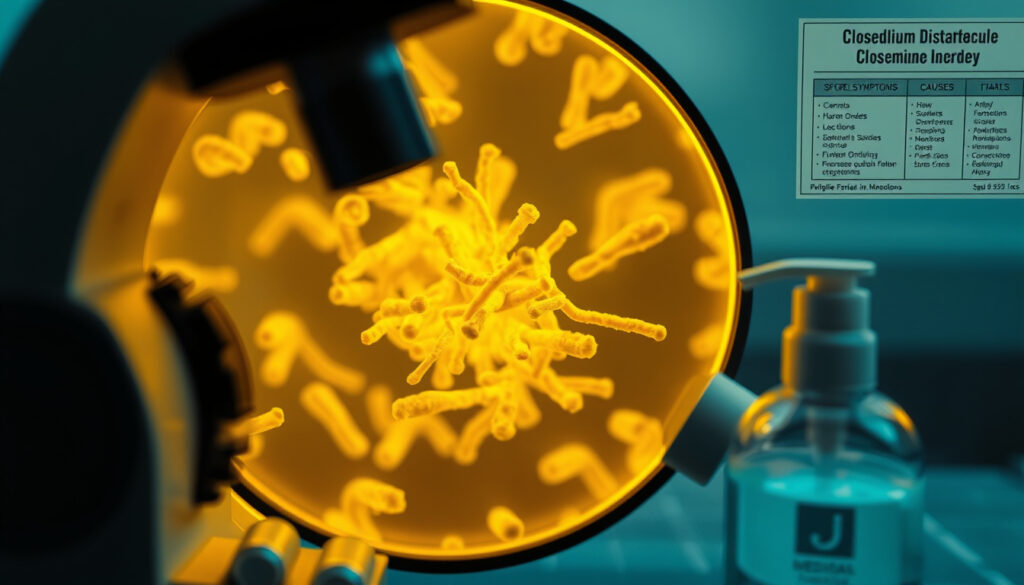
What Is C. Diff? Symptoms, Causes & Treatment Guide
Most bacteria in your gut are harmless—or even helpful. That balance gets disrupted, though, when you take antibiotics. In about 20% of patients, a troublesome bacterium called Clostridioides difficile (C. diff) overruns the colon and triggers symptoms ranging from watery diarrhea to life-threatening colitis. The CDC reports that people on antibiotics are 7–10 times more likely to develop this infection, and roughly 5% of the population carries it without any symptoms at all.
Caused by: Clostridioides difficile bacteria · Primary trigger: Antibiotic use · Main symptoms: Diarrhea and colitis · Transmission: Fecal-oral via spores · Contagious period: Until 48 hours after symptoms clear
Quick snapshot
- C. diff is caused by antibiotic disruption of gut flora (CDC)
- Transmitted via spores through fecal-oral route and contaminated surfaces (North Dakota Health Department)
- Spores survive for months on surfaces and resist most disinfectants (Cleveland Clinic medical resource)
- The exact incubation period varies between individuals (PMC research)
- Whether asymptomatic carriers transmit infection as readily as symptomatic patients (PMC research)
- 1–2 month lag between antibiotic exposure and CDI development (PMC research)
- Healthcare-associated CDI appears 21.6 days after admission; community-acquired appears in 2.1 days (Contagion Live clinical data)
- Standard treatment is 10-day oral vancomycin or fidaxomicin (North Dakota Health Department)
- Fecal microbiota transplant for recurrent cases after antibiotics fail (Cleveland Clinic medical resource)
| Attribute | Detail |
|---|---|
| Full name | Clostridioides difficile |
| Location | Large intestine (colon) |
| Infection type | Diarrhea and colitis |
| Spores | Resistant to antibiotics and disinfectants |
| CDI incidence, Northeast US | 8.0 per 1,000 discharges (2001–2010) (PMC research) |
| CDI incidence, West US | 4.8 per 1,000 discharges (2001–2010) (PMC research) |
| CDI mortality, Midwest US | 7.3% (2001–2010) (PMC research) |
| Mean patient age | 70.9 years (Contagion Live clinical data) |
How does someone get C. diff?
C. diff bacteria are commonly found in the environment, but most infections occur during or shortly after antibiotic use. The connection isn’t coincidence—it’s biology. Antibiotics don’t discriminate between harmful and helpful bacteria. When a broad-spectrum antibiotic wipes out the protective gut flora, C. diff spores that were previously dormant can germinate and multiply unchecked.
Certain antibiotics carry higher CDI risk than others: clindamycin, cephalosporins, and fluoroquinolones disrupt gut bacteria more profoundly than other classes. These high-risk drugs create the conditions that allow C. diff to establish infection.
Role of antibiotics
When you take antibiotics for an unrelated infection, the medication reaches your intestines where it kills off the commensal bacteria that normally keep C. diff in check. Without this competition, C. diff spores germinate into active bacterial cells and produce toxins that damage the colon lining. Research from the PMC shows a 1–2 month lag between antibiotic exposure and CDI development in many patients.
People on antibiotics are 7–10 times more likely to get C. diff compared to those not taking antibiotics, according to Quality Insights. The risk increases further with longer antibiotic courses exceeding one week.
Risk factors in hospitals
Hospital stays create a perfect storm for C. diff transmission. Patients aged 65 and older, those with weakened immune systems, and anyone with a previous C. diff infection face elevated risk. Healthcare settings concentrate both vulnerable patients and contaminated surfaces. Studies show CDI incidence peaks at 8.0 per 1,000 discharges in the US Northeast and 6.2 per 1,000 in spring—seasonal patterns that correlate with peak antibiotic prescribing in winter.
Hospital workers who move between patients without proper handwashing can become vectors themselves. The mean isolation duration for C. diff patients is 20.5 days, reflecting how difficult it is to fully contain this organism in clinical settings.
What are C. diff symptoms?
C. diff symptoms range from mild discomfort to life-threatening colitis. The infection typically announces itself through diarrhea—but not the ordinary kind. Patients describe stools that are unusually watery, frequent, and persistent. Unlike standard gastroenteritis that resolves within days, C. diff diarrhea can continue for weeks without treatment.
Early signs
Initial symptoms often include loose stools occurring three or more times daily, accompanied by mild abdominal cramping. Fever frequently develops as the infection progresses, signaling that the colon is becoming inflamed. The body’s inflammatory response to C. diff toxins creates the characteristic pain radiating across the lower abdomen.
What does C diff poop look like
Patients and clinicians describe C. diff stool as exceptionally watery—often described as “explosive” or “frothy” in texture. Unlike formed stool that passes relatively intact, C. diff diarrhea has a distinctive appearance: pale or yellowish liquid with an unusually foul odor that many describe as sickeningly sweet or medicinal. The smell difference is often the first clue that something beyond ordinary diarrhea is occurring.
What is C. diff smell
The characteristic odor associated with C. diff infection differs markedly from normal fecal smell. Healthcare workers and caregivers often note a sweet, almost chemical scent reminiscent of medicine or antiseptic—distinct from the typical ammonia or sulfur notes of ordinary stool. This smell alone isn’t diagnostic, but combined with persistent watery diarrhea, it serves as a recognizable pattern.
The pattern: watery diarrhea with foul-smelling stool, abdominal pain, and fever appearing within weeks of antibiotic use. When these symptoms cluster together, C. diff should move to the top of the differential diagnosis list.
Is C. diff contagious?
Yes—C. diff is contagious. The CDC confirms that preventing spread requires washing hands with soap and water, since hand sanitizers don’t kill C. diff spores. Transmission occurs through direct hand-to-hand contact and environment-to-person routes, including touching contaminated surfaces or sharing items like towels.
How is C. diff spread
C. diff spreads through the fecal-oral route. An infected person sheds billions of spores in each bowel movement. Those spores transfer to hands, surfaces, clothing, and objects. Because spores resist heat, acid, and most disinfectants, they persist on hospital equipment, bathroom fixtures, and bedding for months. A single handshake with someone who touched a contaminated surface can deliver thousands of spores to your hands.
Is it okay to be around someone with C. diff
Close contact with a C. diff patient requires precautions but doesn’t necessitate isolation of household members. Wash hands thoroughly with soap and water after any contact with the patient or their belongings. Avoid sharing towels, toothbrushes, or bathroom items. Clean shared surfaces with bleach-based products—the only readily available household disinfectant that reliably kills C. diff spores.
C. diff is contagious, but you can keep others from getting it. Wash your hands with soap and water every time you use the bathroom.
The region and season with the highest CDI incidence rates among patients hospitalized in US hospitals were the Northeast and spring, respectively.
— PMC/NIH researchers
About 5% of the general population carries C. diff asymptomatically in their colon without knowing it. This means transmission can occur from people who appear completely healthy, which partially explains why hospital infection control remains challenging despite strict protocols.
Why is C. difficile so bad?
C. diff causes colon inflammation (colitis) that ranges from uncomfortable to fatal. The toxins it produces—toxin A and toxin B—damage the colon lining, causing pseudomembranous colitis, toxic megacolon, and in severe cases, sepsis. The infection is particularly dangerous because spores resist nearly every antibiotic, creating a pathogen that’s notoriously difficult to eliminate once established.
Complications
Severe C. diff colitis can lead to pseudomembranes—patches of inflammatory debris coating the colon wall that appear during colonoscopy. In toxic megacolon, the colon becomes dangerously distended and risks rupture. CDI mortality reaches 7.3% in the US Midwest and 7.9% during winter months, according to PMC research covering 2001–2010 data. The mean patient age in documented cases was 70.9 years, with 55% female, suggesting elderly and immunocompromised populations bear the heaviest burden.
Why hardest to treat
Only two antibiotics are effective against active C. diff infection: vancomycin and fidaxomicin. This narrow arsenal exists because C. diff spores are intrinsically resistant to most drugs—they survive antibiotic treatment and can germinate after therapy ends. Worse, standard antibiotics used for other infections often trigger recurrence by further depleting protective gut bacteria. The infection’s recurrence rate is substantial: after one episode, roughly 1 in 4 patients experience another within eight weeks.
The trade-off: treating C. diff with antibiotics necessarily disrupts the gut environment that would naturally suppress it, creating a cycle where treatment itself promotes recurrence.
Can C. difficile be cured?
Yes—but the path varies depending on infection severity and recurrence history. Standard treatment is a 10-day course of oral vancomycin or fidaxomicin. In about 20% of patients, C. diff resolves within 2–3 days after simply stopping the prior antibiotic that triggered the overgrowth, according to ND Health and Human Services. For recurrent cases, fecal microbiota transplant offers cure rates exceeding 90%.
Treatment options
Oral vancomycin has been the standard for decades—it works by acting directly in the gut lumen where C. diff resides. Fidaxomicin, a newer drug, works similarly but with fewer systemic effects. Both require a full 10-day course even if symptoms improve earlier. Probiotics may be recommended after completing antibiotic therapy to help restore protective gut bacteria, though clinical evidence for their preventive effect remains mixed.
Recovery timeline
Most patients feel significant improvement within 3–5 days of starting appropriate antibiotics. Full resolution of diarrhea typically occurs within 1–2 weeks. However, spores may persist in the colon even after symptoms cease, which is why repeat testing after treatment isn’t recommended—colonization can persist without causing symptoms. Healthcare-associated CDI appears a mean of 21.6 days after hospital admission, while community-acquired cases manifest within 2.1 days.
The implication: recovery extends beyond symptom resolution. Patients should maintain strict hygiene for at least 48 hours after diarrhea stops and continue avoiding antibiotics unless absolutely necessary, since the gut microbiome may take months to fully normalize.
For patients prescribed antibiotics, the choice is straightforward: complete the full course when medically necessary, but question whether every prescription is truly needed. Each unnecessary antibiotic course chips away at the gut flora protecting you from C. diff—and from the hospital stay, treatment costs, and months of worry that a preventable infection brings.
Related reading: AQA A Level Chemistry · Private Dentist Near Me
goodrx.com, pubmed.ncbi.nlm.nih.gov, qualityinsights.org, pmc.ncbi.nlm.nih.gov, journals.asm.org, reviveresearch.org, en.wikipedia.org
Frequently asked questions
How long does C. diff last?
With proper treatment, most C. diff infections resolve within 1–2 weeks. However, diarrhea may persist for several weeks even with appropriate antibiotics. Severe cases or those with complications may take longer to fully recover. The mean isolation duration for hospitalized patients is 20.5 days.
Can C. diff return after treatment?
Yes. Recurrence occurs in approximately 25% of patients within eight weeks of completing treatment. Risk increases with each successive episode. After a first recurrence, roughly 40% of patients experience additional episodes. For patients with recurrent C. diff that doesn’t respond to repeated antibiotic courses, fecal microbiota transplant is recommended.
What kills C. diff spores?
Soap and water are essential—hand sanitizers don’t kill C. diff spores. In clinical settings, bleach-based disinfectants (500–5000 ppm sodium hypochlorite) are required to reliably eliminate spores from surfaces. Heat above 140°F (60°C) also kills spores, which is why steam sterilization is effective for medical equipment.
Is C. diff only in hospitals?
No. While healthcare settings concentrate vulnerable patients and contaminated surfaces, community-acquired C. diff cases have been increasing for three decades. The PMC notes a “profound shift in C. diff epidemiology over the last three decades, starting in the Western world.” Anyone who has taken antibiotics within the past few months can develop C. diff, regardless of hospital exposure.
How to prevent C. diff?
Prevention centers on three pillars: antibiotic stewardship (using antibiotics only when necessary), hand hygiene with soap and water (alcohol-based sanitizers don’t kill spores), and isolation precautions during active infection. Healthcare facilities should isolate C. diff patients and use dedicated equipment to prevent cross-contamination.
Does C. diff cause fever?
Yes. Fever commonly develops as the infection progresses and the colon becomes inflamed. Fever indicates the body is mounting an inflammatory response to C. diff toxins. High fever (>101°F or 38.5°C) suggests more severe colitis and warrants prompt medical evaluation.
Can mild C. diff go away on its own?
In approximately 20% of patients, C. diff resolves within 2–3 days after stopping the antibiotic that triggered the overgrowth. However, waiting without treatment risks progression to severe colitis. Any suspected C. diff infection should be evaluated by a healthcare provider who can determine whether treatment is necessary.
More related posts
 Sean Combs: The Reckoning: Verified Facts and Key Details
 Kanye We t and Bianca Cen ori: Split, Reunion & Timeline
 Mounjaro Side Effects UK: Common Issues & Management Tips
 Drayton Manor Discount Code: Save with Tesco Clubcard & More
 BBC Sport Live Scores: Football Results & Fixtures
 How to Organize a Potluck: Signup Sheets, Etiquette & Recipes
 Dean Martin: King of Cool’s Death, Funeral & Family
 Zoopla Houses for Sale: UK and Ireland Buyer Guide