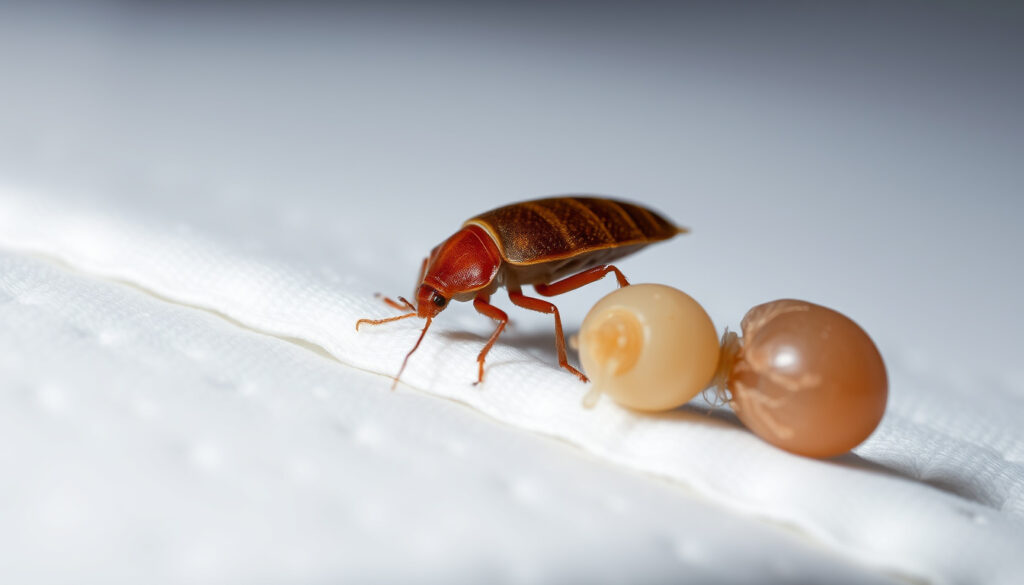
What Do Bed Bugs Look Like? Size, Color & Life Cycle
Few things are as unsettling as spotting a tiny, unfamiliar bug on your sheets and wondering what it is. If it’s oval, flat, and reddish brown, you might be looking at a bed bug. Adult bed bugs are about 5 to 7 mm long — roughly the size of an apple seed, according to the US Environmental Protection Agency (EPA). This guide walks you through every life stage, explains common look-alikes, and shows you what to look for so you can confirm whether you’re dealing with bed bugs.
Adult bed bug length: 5 to 7 mm (size of an apple seed) · Adult bed bug color: Reddish brown, darker after feeding · Nymph size: 1.5 mm (transparent or tan) · Egg length: 1 mm (pearl white)
Quick snapshot
- Adult: 5-7 mm (apple seed) (US EPA)
- Nymph: 1.5-5 mm (University of Tennessee)
- Egg: 1 mm (Orkin)
- Flat, oval body (no wings) (University of Tennessee)
- 6 legs, 3-segment antennae (US EPA)
- Single segment pronotum (Orkin Canada)
- Cockroach nymphs (University of Tennessee)
- Carpet beetles (University of Tennessee)
- Fleas (University of Tennessee)
- Booklice (University of Tennessee)
- Spider beetles (University of Tennessee)
Seven key facts, one pattern: every life stage has a distinct size and color that changes after feeding.
| Stage | Size | Color | Notes |
|---|---|---|---|
| Adult | 5–7 mm (apple seed) | Reddish brown, dark red after feeding | Flat, oval, wingless |
| Nymph | 1.5–5 mm | Tan or translucent | Five instars; needs blood meal to molt |
| Egg | 1 mm | Pearl white | Oval, laid singly or in clusters |
| Egg hatch time | 6–10 days (room temperature) | Faster in warmer conditions | |
| Life cycle duration | 5–7 weeks (egg to adult) | Depends on feeding frequency | |
What do bed bugs look like?
Adult bed bug size, shape, and color
- Adult bed bugs are 5–7 mm long, about the size of an apple seed (US EPA).
- Unfed adults are brown, flat, and oval-shaped; after a blood meal they become more balloon-like, reddish-brown, and elongated (US EPA).
- They have six legs, three-segment antennae, and no wings (University of Tennessee Department of Entomology and Plant Pathology).
The impression: an adult bed bug looks like a small, flat lentil that suddenly turns into a dark red grape after it feeds.
Nymph and egg stage appearance
- Nymphs (young bed bugs) are smaller — from 1.5 mm at first instar to 5 mm at the fifth instar — and are translucent or whitish-yellow, making them almost invisible against light sheets (US EPA).
- First-instar nymphs have a clear body with red eyes (University of Tennessee Bed Bugs in Tennessee program).
- Bed bug eggs are tiny — about 1 mm long — pearl white, and oval, often laid in clusters in cracks and crevices (Orkin).
“First-instar nymphs are clear to lightly colored with red eyes.”
— University of Tennessee Bed Bugs in Tennessee program (source)
What do bed bugs look like to the human eye?
- At adult size (5–7 mm), bed bugs are easily visible without magnification (US EPA).
- Nymphs, especially early instars, can be confused with specks of dirt or lint (University of Tennessee).
- To the naked eye, unfed adults appear as small, brown, flat ovals; fed adults look like small dark red capsules (US EPA).
Homeowners who spot a 5–7 mm reddish brown bug on their mattress are likely looking at an adult bed bug. But nymphs and eggs are easy to miss — that’s why inspecting with a flashlight and magnifying glass is essential for early detection.
How do you tell if you’ve got bed bugs?
Early signs of bed bugs in your home
- Look for dark spots (fecal matter) on sheets, mattresses, and furniture — the University of Tennessee calls this “fecal speckling”.
- Shed skins (exoskeletons) and eggshells accumulate near hiding spots (Orkin Canada).
- Rusty or reddish stains on bedding from crushed bed bugs (US EPA).
- Unusual musty-sweetish odor from glands on the lower side of the body (US EPA).
Visual inspection of mattress and furniture
- Check mattress seams, box springs, bed frames, headboards, and furniture cracks — bed bugs prefer dark, narrow spaces near sleeping areas (Orkin Canada).
- Use a flashlight and credit card to pry into crevices; specimens can be collected on sticky tape for identification (University of Tennessee).
“The presence of fecal spots, shed skins, and live bugs are key visual clues of an infestation.”
— Virginia Department of Agriculture and Consumer Services (VDACS)
Signs of bed bugs photos and what to look for
- Notice patterns: dark dots in mattress folds, white eggs in seams, and live bugs wandering after dark (PestWorld).
Why this matters: Identifying signs early — before a full infestation — can save hundreds of dollars and weeks of treatment. Feces and shed skins are often the first visible clues, appearing weeks before the bugs themselves become abundant.
What can be mistaken for a bed bug?
8 Bugs That Look Like Bed Bugs
- Cockroach nymphs – similar size and brown color but have a more elongated body and two long antennae (University of Tennessee).
- Carpet beetles – rounder, often with patterned shells and visible wings (University of Tennessee).
- Fleas – much smaller (1–3 mm), dark, and jump; bed bugs crawl, they do not jump (University of Tennessee).
- Booklice – tiny (1–2 mm), soft-bodied, and pale; often found near paper or mold (University of Tennessee).
- Spider beetles – spherical, with long legs and antennae that resemble a small spider (University of Tennessee).
Key differences between bed bugs and similar insects
- Bed bugs are flat, oval, and wingless; they do not have the distinct “humpback” of a cockroach nymph (University of Tennessee).
- Bed bugs never jump or fly — unlike fleas or carpet beetles (University of Tennessee).
- When in doubt, collect a specimen in a sealed bag and consult a local extension service or pest professional (University of Tennessee).
Many small brown insects get mistaken for bed bugs. The main giveaway: bed bugs are flat (not round), have no wings, and cannot jump. If you see something that hops or flies, it’s not a bed bug.
The trade-off: Misidentification can lead to panic — or worse, ignoring a real infestation. A close inspection using the criteria above (flat, wingless, no jumping) separates true bed bugs from harmless look-alikes.
What do bed bug bites look like?
Appearance of bed bug bites
- Bites appear as small red welts, often in a line or cluster — sometimes called “breakfast, lunch, and dinner” pattern (University of Tennessee).
- Bites can be itchy and may take days to appear; some people have no visible reaction (University of Tennessee).
Where do bed bugs bite you first?
- Bed bugs usually bite exposed skin while people sleep: face, neck, arms, hands, and legs (University of Tennessee).
- They are attracted to carbon dioxide and warmth, not to specific body parts (PestWorld).
What part of the body do bedbugs bite the most?
- Any exposed skin area is vulnerable; the face, neck, and arms are the most common sites (University of Tennessee).
“Medical professionals cannot accurately diagnose bed bugs by bite alone. A specimen should be brought for accurate identification.”
— University of Tennessee Bed Bugs in Tennessee program (source)
The implication: Bite patterns are suggestive, not conclusive. Since reactions vary widely, never assume bed bugs solely from bites — always look for physical signs (feces, shed skins, live bugs) to confirm.
How to get rid of bed bugs (and what instantly kills them)?
What instantly kills bed bugs?
- High heat — temperatures above 120°F (49°C) kill bed bugs and eggs instantly (US EPA).
- Direct application of 91% isopropyl alcohol can kill on contact, but it’s flammable and not a whole-treatment solution (University of Tennessee).
DIY Bed Bug Treatment
- Wash infested bedding and clothing in hot water (130°F+) and dry on high heat for at least 30 minutes (US EPA).
- Vacuum thoroughly, especially mattress seams and furniture crevices, then immediately dispose of the vacuum bag in a sealed plastic bag (University of Tennessee).
- Use mattress encasements designed for bed bugs to trap any existing bugs and prevent new ones (Orkin Canada).
- Apply diatomaceous earth in cracks and crevices — it dehydrates bugs over days, not instantly (University of Tennessee).
- For heavy infestations, call a licensed pest control professional who uses heat treatments or steam (US EPA).
Using Heat to Kill Bed Bugs
- Portable steamers (120°F+ at the nozzle) kill bugs and eggs in mattress seams and furniture (US EPA).
- Whole-room heat treatment (135°F for several hours) is effective but must be done by professionals (University of Tennessee).
What to watch: No single household product kills bed bugs instantly in all hiding spots. The most effective strategy: use heat (120°F+) for immediate kill, and combine with vacuuming and encasements to manage the full population.
What smell do bed bugs hate the most?
Natural repellents and prevention
- Lavender, tea tree oil, peppermint, and eucalyptus oils are often cited as repellents (University of Tennessee).
- Scented dryer sheets and rubbing alcohol are also believed to repel, but no strong scientific evidence supports a long-term repellent effect.
- Prevention is best achieved through vigilance and physical barriers rather than relying on smells.
Can I Prevent Bed Bugs Naturally?
While some natural oils may deter bed bugs temporarily, they cannot eliminate an infestation. The most reliable prevention involves inspecting secondhand furniture, using mattress encasements, and sealing cracks.
The reality: No smell has been proven to repel bed bugs reliably. Rely on physical barriers and regular inspection instead of scented products.
What causes bed bugs and where do they hide?
Can bed bugs live on pillows?
Yes. Bed bugs often hide in mattress seams, box springs, bed frames, and pillows. They are attracted to carbon dioxide and warmth, not dirt. Infestations typically start from travel, used furniture, or visitors.
Bed Bugs in Pillows: Signs, Prevention, and Removal
Look for small dark spots, shed skins, or live bugs in pillow seams. Wash pillows in hot water and dry on high heat. Use zippered pillow protectors to trap any bugs inside.
The takeaway: Early detection and prevention save time and money. Inspect any area where people sleep or rest, including pillows and headboards.
Summary
For homeowners facing the unsettling discovery of an unfamiliar bug in their bedroom, the path forward starts with accurate identification. Bed bugs are distinct in size (5–7 mm adults), shape (flat, oval, wingless), and the way they change color after feeding. But because nymphs and eggs are tiny and translucent, and because several look-alike insects exist, a careful inspection using the signs listed here — fecal spots, shed skins, and live specimens — is essential. If you suspect bed bugs, collect a sample and consult a local extension office or pest professional before spending money on treatments. The decision for anyone in a household: invest time in a thorough inspection now, or risk a months-long infestation that costs far more later.
For more on identifying health conditions, see What Is C. Diff? Symptoms, Causes & Treatment Guide and Symptoms of Cervical Cancer: Early Warning Signs.
For a more comprehensive look at their appearance, consult this detailed bed bug identification guide from a UK-based source.
Frequently asked questions
What do bed bugs look like on sheets?
On white sheets, bed bugs appear as small rust-colored or dark spots (fecal matter) and occasionally as live bugs: reddish brown, 5–7 mm adults or translucent nymphs. Eggs look like tiny white specks in seam folds.
How long can bed bugs live without feeding?
Adults can survive several months to over a year without a blood meal, depending on temperature and humidity (University of Tennessee).
Do bed bugs fly?
No. Bed bugs are wingless and cannot fly or jump — they only crawl (University of Tennessee).
Can you see bed bugs with the naked eye?
Yes. Adults are 5–7 mm, about the size of an apple seed, and easily visible. Nymphs and eggs are much smaller but still visible with good eyesight (US EPA).
Are bed bug bites dangerous?
Generally not dangerous, but intense scratching can lead to secondary infections. Allergic reactions are rare but possible (University of Tennessee).
What temperature kills bed bugs and their eggs?
120°F (49°C) kills all life stages instantly; eggs require the same temperature but slightly longer exposure (US EPA).
How quickly do bed bugs multiply?
A female lays 2–5 eggs per day; under ideal conditions, a population can double every 2–3 weeks (Orkin).
More related posts
 Samsung S25 Ultra Case Guide: Where to Buy in Ireland
 Miss Dior Blooming Bouquet: Notes, Dupes, Sizes & Review
 Best Laptop Backpack for Women: Styles & Ireland Picks
 Nottingham Forest vs Leicester City Lineups: Predicted XIs
 Sunrisers Hyderabad vs Gujarat Titans Timeline: History & Stats
 Ryanair Cabin Baggage Allowance Changes 2026: New Size Rules & Guide
 Shadow of the Tomb Raider: The Final Chapter Explained
 Cast of Dabba Cartel – Key Figures in Delhi IPL Betting Busts